You want more space, a manageable commute, and a neighborhood that makes everyday life with kids feel easier. In Brooklyn, that mix looks different block by block, which can make the search both exciting and overwhelming. The good news is you can evaluate family fit with a clear process that balances schools, parks, housing type, transit, safety, and childcare. This guide gives you a practical framework, local context, and links to the right tools so you can compare neighborhoods with confidence. Let’s dive in.
Start with a Brooklyn snapshot
Brooklyn is home to about 2.62 million people, and roughly 21.5% are under 18, so you’ll find plenty of family activity across the borough. Owner-occupied housing sits around 29.5%, which reflects the strong mix of co-ops, condos, rentals, and townhouses. Borough estimates put the median value of owner‑occupied homes near $905,000 and median gross rent around $1,833, with wide variation by neighborhood and building type. The average commute for workers is about 41.7 minutes, which makes transit access a key factor in your day-to-day routine. These figures come from the U.S. Census Bureau’s QuickFacts for Kings County and set the stage for your neighborhood comparisons.
Understand schools and enrollment
Public school options in New York City include zoned neighborhood schools, non-zoned programs, and specialized or screened options. The Department of Education manages admissions through Family Welcome Centers and the MySchools system, which lets you look up zoned schools for a specific address and follow application timelines. You can also review School Quality Snapshots and program types to see how each school is structured.
Learn about kindergarten admissions and address lookup
Zoned vs. non-zoned options
Many elementary and some middle schools in Brooklyn are zoned, which means addresses inside the zone get priority for seats. Other schools are non-zoned, and some have screened, dual-language, or Gifted & Talented programs with different admissions criteria. Always verify your exact address in the DOE school lookup before you make assumptions about where your child is likely to enroll.
What to review for each school
- Address-based zoned school and seat priority
- School Quality Snapshot and recent NYC School Survey results
- Program types, after-school offerings, and language programs
How to research NYC public schools
Parks, playgrounds, and outdoor time
Everyday access to green space can be a family game changer. Prospect Park is the borough’s signature park, a Frederick Law Olmsted and Calvert Vaux design spanning about 585 acres and anchoring many family-friendly neighborhoods nearby. Brooklyn Bridge Park, Fort Greene Park, Marine Park, and dozens of playgrounds offer fields, promenades, and seasonal programs. As you tour, map playgrounds within a 10-minute walk and visit at different times to see how the space functions for families.
- Prospect Park overview
- Find a Park and local playgrounds
- Brooklyn Bridge Park accessibility and amenities
Housing types and affordability
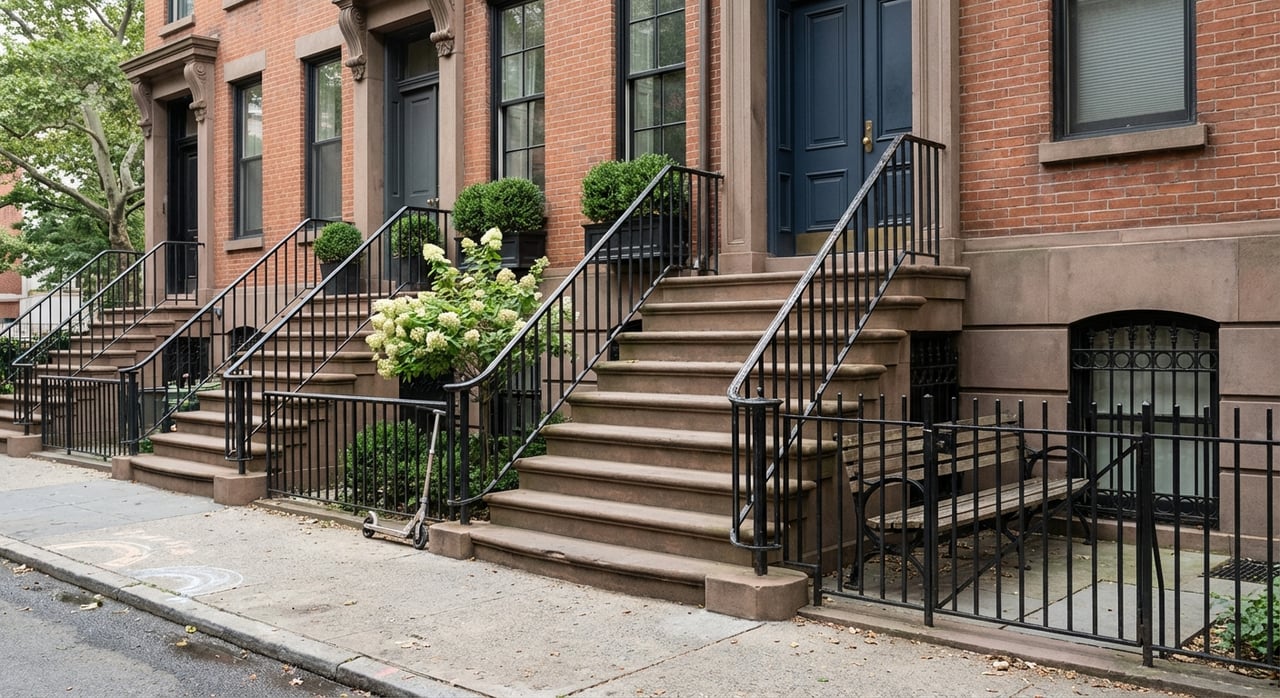
Brooklyn’s housing stock ranges from brownstone rowhouses and prewar co-ops to modern condos and single-family pockets. For families, layout often matters more than square footage. Look for flexible living areas, bedroom separation, storage, and elevator or stroller-friendly access.
At the borough level, the median value of owner-occupied homes is around $905,000 and median gross rent is about $1,833, but two- to four-bedroom homes vary widely by neighborhood and building type. To understand current sales dynamics, pair neighborhood tours with recent market snapshots. PropertyShark reported Brooklyn’s median sale price in the high hundreds of thousands in late 2025, a reminder that pricing moves with inventory and demand.
Commute and transit reality
Your daily timeline matters as much as distance. With a borough mean commute near 41.7 minutes, proximity to reliable subway lines or express buses can make school drop-off and pickup feel doable. When you evaluate a home, run sample commutes at the exact times you would travel with kids, including late-day pickups and weekend activities. Confirm line-level details and service patterns on MTA tools and check for nearby alternative routes.
Safety and neighborhood data checks
Safety perceptions can change block to block. Pair your on-the-ground visits with precinct-level data to understand recent incident trends. Compare multi-year patterns rather than a single month to avoid overreacting to outliers, and walk the area at different times to observe lighting, traffic calming, and community activity.
Childcare, pre-K, and early learning
Infant and toddler care can be a family’s largest monthly expense. Recent state-level summaries place typical annual center-based infant care in New York in the high teens, around $19,000 per year as a rough reference point. Availability and subsidy rules vary by program and income, so plan to call a few centers near your target blocks to check waitlists and schedules.
Family services and third spaces
Look for everyday anchors that support life with kids. Proximity to pediatricians, pharmacies, and libraries with children’s programming can simplify your week. The Brooklyn Children’s Museum offers rotating exhibits and events that many families build into their routine. Neighborhood rec centers, music schools, and play spaces are worth mapping as you compare addresses.
Neighborhood snapshots to compare
Below are brief, family-focused snapshots. Use them as a starting point, then verify schools and commutes for specific addresses.
Park Slope
Park Slope lines the western edge of Prospect Park, with brownstones and many 2 to 3 bedroom co-ops and condos. Families value the cluster of playgrounds and easy park access for weekend time. Zoned elementary options like P.S. 321 are part of many searches, so always confirm your exact address assignment and enrollment timelines. You can review P.S. 321’s profile on InsideSchools for neutral, descriptive context.
Brooklyn Heights, Cobble Hill, Carroll Gardens
These classic brownstone neighborhoods offer walkable streets, waterfront promenades, and boutique amenities. Inventory includes townhouses, co-ops, and condos that attract move-up buyers. School demand is typically strong and varies by address and grade, so use the DOE lookup and School Quality resources before you decide. Prices often trend higher than borough medians, which makes careful budgeting and pre-approval planning important.
Prospect Heights, Prospect-Lefferts Gardens, Crown Heights
Closer to Prospect Park and the Brooklyn Museum, these areas mix prewar walkups, rowhouses, and newer condos. Families often focus on park proximity and playground access, along with straightforward transit to work hubs. School options vary by block and grade, so verify zoning and program types in MySchools. Tour at different times to understand traffic, noise, and after-school activity.
Bay Ridge and Bensonhurst
Southwest Brooklyn offers more single-family homes and larger 2 to 3 bedroom apartments on quieter blocks. Many households here own cars, which can be practical for weekend travel and activities. Commutes to Midtown can be longer than in brownstone Brooklyn, so test your routes and timing carefully. Median prices in these areas are often lower than in Park Slope or Brooklyn Heights, a potential value fit for upsizing.
Windsor Terrace and Ditmas Park
These smaller-scale pockets near Prospect Park feel residential, with Ditmas Park known for larger Victorian houses and tree-lined streets. You’ll see co-ops, condos, and single-family options with more house-like layouts. Families appreciate local playgrounds and neighborhood retail, along with park access for open space. Confirm school zoning for your exact address and review walkability to daily essentials.
Williamsburg and Greenpoint
North Brooklyn has grown more family-oriented over time, with newer condos and some rowhouses near restaurants, waterfront paths, and creative spaces. You’ll find a range of unit sizes and building amenities that can simplify life with kids. Transit to Manhattan can be direct from certain locations, so compare commute windows for both caregivers. As always, verify address-based school options and after-school programs.
Sheepshead Bay and Marine Park
Southern Brooklyn offers more single-family and waterfront-adjacent housing, often at a lower per-square-foot price than some central brownstone areas. Green space, local fields, and access to Marine Park are key draws. Test commutes to your job centers and check park and playground access for weekend routines. Confirm school zoning and program types to understand your options by grade.
A step-by-step checklist
Use this actionable list as you compare addresses. Save notes for each item so you can weigh tradeoffs clearly.
- Confirm your zoned elementary or middle school by entering the address in MySchools. Note whether the school is zoned or non-zoned and any priority rules. Start with DOE admissions
- Pull the School Quality Snapshot, School Quality Guide, and recent NYC School Survey results for that school. How to research NYC schools
- Walk playgrounds and parks at different times. Cross-check maintenance and facilities in the NYC Parks map. Find a Park
- Review precinct-level trends and compare multi-year patterns. NYPD historic data
- Compare active and recent listings to gauge typical bedroom counts and closing ranges for family-size homes. Save dates and sources for each snapshot you use.
- Run sample commutes at the exact times you would travel with kids, including return trips. Confirm service patterns with MTA tools. MTA site
- Call 2 to 3 childcare centers near your target blocks. Ask about infant and toddler availability, schedule, and waitlists. New York childcare overview
- Check everyday access: elevator vs. walk-up, stroller-friendly sidewalks, parking or garage options, grocery and pharmacy proximity, pediatrician availability.
Work with a local advisor
Choosing the right neighborhood for your family is a mix of numbers and lifestyle. You deserve clear guidance on co-ops vs. condos, board packages, pricing trends, and how each block supports daily life with kids. If you want help narrowing your search and pressure-testing tradeoffs, connect with The Christina Kremidas Team. Our boutique, high-touch approach pairs education with expert negotiation so you can choose your Brooklyn home with confidence.
FAQs
What does a zoned school mean in Brooklyn?
- A zoned school gives admission priority to students who live within a specific address boundary; confirm zoning for your exact address in the DOE’s MySchools lookup and review School Quality resources.
How can I compare commute times for a family schedule?
- Run morning drop-off and afternoon pickup routes on mapping tools, then confirm service details on the MTA site; aim for routes with minimal transfers and reliable frequency.
What is a typical childcare cost in Brooklyn?
- State-level summaries place typical annual center-based infant care in New York around $19,000; check nearby centers for current tuition, schedules, and waitlists.
How do I find parks and playgrounds near a potential home?
- Use NYC Parks’ map to locate playgrounds and facilities within a 5 to 10 minute walk, then visit at different times to see usage, lighting, and condition.
Are there single-family homes available in Brooklyn?
- Yes, areas like Bay Ridge, Bensonhurst, Ditmas Park, Sheepshead Bay, and Marine Park include single-family houses alongside co-ops and condos; inventory and prices vary by block.
How should I evaluate safety on a specific block?
- Pair in-person visits at different times with precinct-level trends from the NYPD historic dataset and look for multi-year patterns rather than single-month changes.