
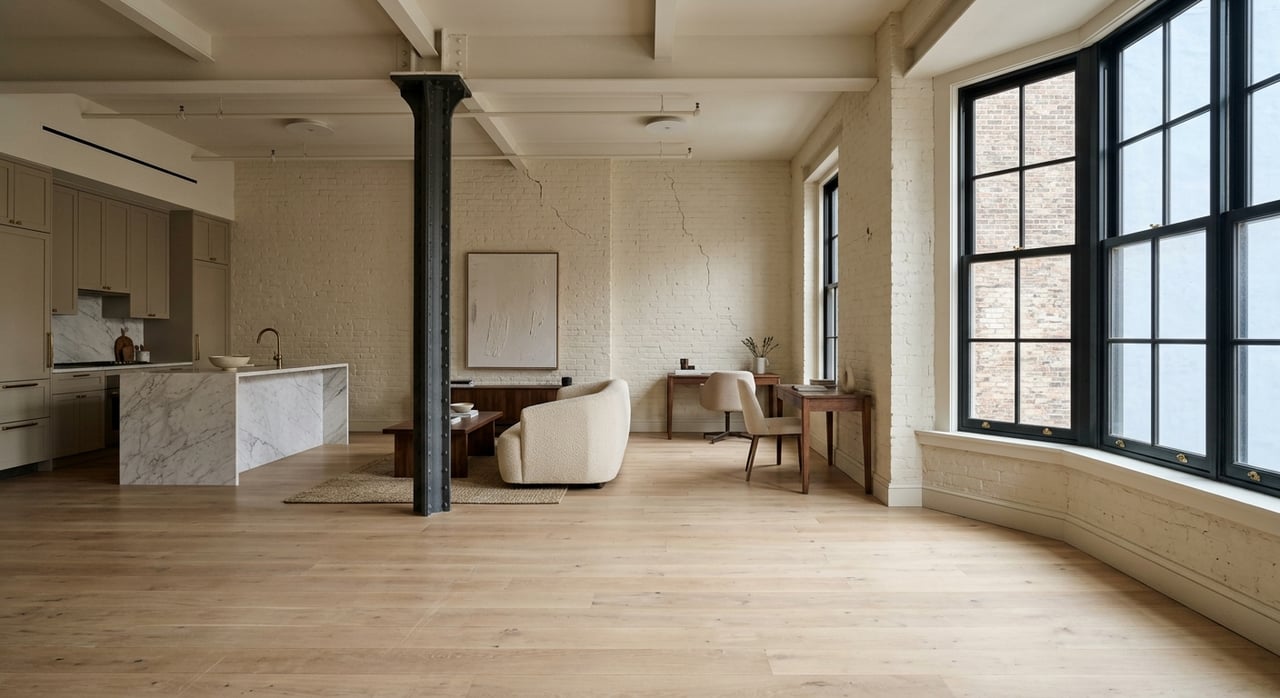
If you have ever walked through a Flatiron loft and thought, this feels completely different from a standard apartment, you are not imagining it. Buying here is exciting, but it can also get complicated fast because the appeal is not just about finishes or square footage. You need to understand architecture, layout, legal use, and building-level details before you commit. This guide will help you read Flatiron lofts like a smart NYC buyer. Let’s dive in.
Why Flatiron lofts stand out
Flatiron sits roughly between 20th and 29th Streets, from Park Avenue South to Sixth Avenue, between Chelsea, Gramercy, and NoMad. It has a historic commercial core, with cast-iron and Beaux-Arts architecture, plus a growing residential mix created through luxury development and former loft conversions.
That blend gives Flatiron lofts a very specific identity. Many come from early-20th-century commercial buildings that were originally built for production, showroom, warehouse, or office use. Today, those same spaces are often marketed as high-end homes with a level of scale and character that is hard to duplicate in more conventional apartment stock.
What creates the loft feel
A lot of Flatiron’s loft appeal comes from the original architecture. Planning documents describe these older loft buildings as having tall windows that brought light and air deep into large workspaces, along with substantial street walls and setbacks that shaped the block.
For you as a buyer, that often translates into the features people want most in a loft: open volume, oversized windows, and a brighter, more expansive feel. In many cases, the emotional value of the space is tied as much to that feeling as it is to the official square footage.
Which Flatiron loft type fits you
Not every Flatiron loft is the same. It helps to separate the neighborhood’s inventory into a few clear building categories before you start comparing listings.
Early commercial loft buildings
These are the classic loft buildings that were originally designed for work, storage, or showroom use. They often deliver the strongest architectural character, but they may also come with trickier floor plans, structural columns, or legal-use questions.
Landmark or historic buildings
Some Flatiron properties are landmarked or sit within historic districts. That can help preserve exterior character, but it also means some building changes may require approval from the Landmarks Preservation Commission.
Newer condo conversions
These homes often keep loft-like scale while adding more familiar residential amenities. If you want high ceilings and bigger windows but prefer a more turnkey ownership experience, this category may feel more straightforward.
Buildings with special occupancy history
Some loft-style spaces have legalization histories or occupancy rules that need careful review. A space may look residential, but that does not automatically mean it is approved for every kind of residential or live/work use.
Why layout matters more than size
In Flatiron, a dramatic shell does not always equal an easy-to-live-in home. Loft value is usually tied to scarcity and livability, not just raw square footage.
That means you should pay close attention to how the unit actually functions day to day. An open plan can feel amazing at first glance, but the real question is whether the space supports the way you live, work, and store things.
Read the window line first
Start with the natural light. Check whether the main living space gets the best window line or whether too much of the unit sits in a deep interior core.
Tall windows are one of the reasons lofts feel special, but not every square foot benefits equally. If the brightest part of the apartment is poorly allocated, the layout may feel less useful than the numbers suggest.
Watch for deep or irregular floorplates
NYC planning documents specifically note that deep, narrow, or irregular floorplates can make apartment layouts harder to solve. In practical terms, that can affect where bedrooms, offices, and storage can legally and comfortably go.
A beautiful open space can still become frustrating if the interior portion of the loft is too dark or too awkward to use efficiently. This is one reason two lofts with similar square footage can feel completely different in person.
Check the columns carefully
Columns are part of the charm in many lofts, but they can also affect furniture layout and room planning. You should look beyond the staged setup and think about where your sofa, dining table, desk, and bed would actually go.
In some cases, columns make it much harder to create a practical secondary sleeping area or office. The more column-heavy the floor plate, the more important it is to test the layout against your real needs.
Confirm ceiling height throughout
High ceilings are a major part of loft appeal, but you should confirm whether the height is consistent throughout the unit. Sometimes one area feels dramatic while other portions drop lower because of mechanicals or later buildouts.
If the listing sells a volume story, make sure the entire apartment supports it. That detail can affect both daily comfort and long-term resale appeal.
Legal use is not a small detail
In NYC lofts, legal status is one of the most important parts of due diligence. A space that looks like a residence is not automatically legal as a residence, and a loft-like setup is not automatically live/work ready.
The starting point is the building’s Certificate of Occupancy, or CO. The CO states the legal use and permitted occupancy of the building, and NYC says no one may legally occupy a building until a CO or Temporary Certificate of Occupancy has been issued.
For some older buildings, a Letter of No Objection may be used to confirm legal use where a CO was not originally required. The key point is simple: before you assume a renovation is cosmetic or a layout is flexible, the legal status has to be verified.
Understand Loft Law issues
This gets especially important in former commercial or manufacturing buildings. The Loft Law governs certain buildings that were converted to residences, and the Loft Board oversees legalization to safe residential use.
There are also status-specific occupancy rules in some loft situations. The practical takeaway for you is that every loft-style property needs to be checked for its actual legal occupancy status, not just marketed appearance.
Renovation can change the whole deal
Many buyers see Flatiron lofts as blank canvases, which can be true. But in NYC, renovation planning is not just about design taste. It is also about permits, timing, review, and whether the work changes legal use, occupancy, or egress.
According to DOB, work that does not trigger a new CO is generally treated as a renovation project. Work that does trigger a new CO becomes an alteration project, and that typically requires more review and inspection.
Know what pushes work into alteration
If you need to move walls, shift plumbing, rework HVAC, or change egress, the project may become more complex than you first expected. Those changes can affect both timeline and cost.
This is why a loft that seems like a cosmetic update on day one can become a much bigger undertaking after plans are reviewed. The smartest buyers build that possibility into their expectations early.
Landmark rules may apply
If the building is landmarked or in a historic district, proposed changes affecting the designated building may need approval from the Landmarks Preservation Commission. That does not mean change is impossible, but it does mean process matters.
For buyers with a specific design vision, this is worth understanding upfront. It can shape what is feasible and how long approvals may take.
Financing can be easier or harder by building
When buyers think about financing, they often focus on personal income, down payment, and rate. In a Flatiron loft purchase, the building itself can also affect how smooth the loan process feels.
Fannie Mae notes that condo project eligibility can be affected by deferred maintenance, litigation, hotel- or resort-type transient occupancy, too much commercial space, or inadequate insurance. Lenders also use project questionnaires to evaluate project eligibility.
In Flatiron, that matters because some buildings are mixed-use, converted, or more complex than a standard residential condo. Even if you are fully qualified, building-level issues can still slow or complicate financing.
Flatiron versus nearby neighborhoods
If you are deciding whether Flatiron is truly the right fit, it helps to compare it with nearby downtown neighborhoods that attract similar buyers.
Flatiron vs. Chelsea
Chelsea has a stronger warehouse-conversion and West Side industrial identity. If you want loft character in an area more closely tied to galleries and an industrial-to-arts transition, Chelsea may be worth comparing.
Flatiron feels more compact and polished in its commercial character. It often appeals to buyers who want classic loft traits with a more Midtown-adjacent rhythm.
Flatiron vs. NoMad
NoMad blends historic Beaux-Arts architecture with luxury hotels, adaptive reuse, and creative office energy. If you want a similar central location but prefer a more amenity-forward environment, NoMad may feel like a natural alternative.
Flatiron is generally the more loft-centric comparison. It tends to appeal to buyers who want architecture and volume to lead the lifestyle story.
Flatiron vs. Union Square
Union Square is one of the city’s strongest commuter hubs and has a more obvious transit-centered identity. If your top priority is being at a major crossroads of downtown and Midtown, that location may stand out.
Flatiron is still lively and well connected, but its appeal is slightly different. It often feels more like an office-to-home neighborhood with strong weekday energy and a bit more breathing room at night.
Flatiron vs. Gramercy
Gramercy is the clearest alternative if you are deciding between loft living and a more traditional residential feel. It is more associated with prewar co-ops, townhouses, and a quieter atmosphere.
If you want flexible, design-forward space with downtown energy, Flatiron is often the stronger match. If you want character without the open industrial feel, Gramercy may be a better fit.
What smart Flatiron buyers prioritize
The best Flatiron lofts usually succeed on four fronts at once: light, volume, legal clarity, and a workable plan. When those pieces line up, you get a home that feels special and makes sense on paper.
The riskier purchase is often the one that looks dramatic in photos but has an ambiguous CO, a difficult floorplate, or building-level financing challenges. In this part of Manhattan, the winning buy is rarely just the prettiest one. It is the one that balances lifestyle and execution.
If you are thinking about buying a loft in Flatiron, having the right guidance can save you time, stress, and expensive surprises. The Christina Kremidas Team helps NYC buyers navigate downtown condos, co-ops, and complex purchases with clear advice, strong negotiation, and hands-on transaction management.
FAQs
What makes a Flatiron loft different from a standard NYC apartment?
- Flatiron lofts are often created from older commercial buildings, so they may offer taller windows, more open volume, and a layout that feels very different from a conventional apartment.
What should you check first when buying a Flatiron loft?
- You should start with the layout, natural light, column placement, ceiling height, and the building’s legal occupancy status before assuming the space will function the way you want.
Why does the Certificate of Occupancy matter in a Flatiron loft purchase?
- The Certificate of Occupancy states the legal use and permitted occupancy of the building, which is critical in lofts where residential status or live/work assumptions may not match the legal record.
Can you easily renovate a loft in Flatiron, NYC?
- Not always, because moving walls, plumbing, HVAC, or egress elements can push the work into a more complex alteration process, and landmarked buildings may require additional approvals.
Are Flatiron lofts harder to finance than other Manhattan condos?
- They can be, especially in mixed-use or conversion buildings where project eligibility, commercial space, deferred maintenance, insurance, or other building-level issues affect lender review.
How does Flatiron compare with Chelsea, NoMad, Union Square, and Gramercy for loft buyers?
- Flatiron is generally more loft-centric than NoMad, more polished and compact than Chelsea, less transit-dominated than Union Square, and more open and design-forward than Gramercy.